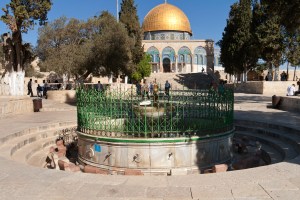
Der Tempelberg – die heiligste Stätte auf Erden für das Judentum
 Im Abschnitt dieser Woche, Teuma, befiehlt G”tt dem Mosche (Schemot 25:8): וְעָ֥שׂוּ לִ֖י מִקְדָּ֑שׁ וְשָׁכַנְתִּ֖י בְּתֹוכָֽם — Und sie sollen mir ein Heiligtum machen, daß ich mitten unter ihnen wohne!
Dazu passt hervorragend ein Artikel meiner Wenigkeit, der im Dezember 2016 im Pfarrblatt St. Stephan veröffentlicht wurde. In den Worten des Verlegers: Der Tempelberg in Jerusalem, wo einst der Tempel Salomos gestanden hat, gilt bis heute als heiliger Ort der Begegnung zwischen Gott und den Menschen. Oberrabbiner Arie FOLGER über die Spannung von Transzendenz und Immanenz, das Goldene Kalb und das Bedürfnis nach einem Haus Gottes. Read the rest of this entry »


 Posted by Arie Folger
  The order of the Biblical parshiyot from Schemot 25 through the end of that book presents a particular chronological and thematic challenge. In the parshiyot Terumah and Tetzaveh (chs. 25-30), G”d tells Moshe Rabbenu to command the Israelites to make a Mishkan, that G”d may reside in the Israelites’ midst. Then, in the beginning of Ki Tissa, the command is relayed to the people, and immediately afterwards the Torah reports the sin of the Golden Calf. Finally, in Vayaqhel and Piqudei(chs. 35-40), the work is carried out and brought to a successful completion.

 Mikolot Mayim Rabbim