
 It’s been several years now that I have been dismayed at the increasingly polarized din of political and societal “debates.” I put debates in quotes, because people are mostly talking past each other. This first hit me in the early 90s in Israel, when the climate in Western Europe was still more concilliatory. I have seen American politics become increasinly polarized and ascerbic, and see it in Europe, too, though to a lesser extent. In Europe, this is usually seen in matters relating to money (taxes, monetary policy, rescue of failing banks, national cost cutting plans, pensions), but less so in other, mostly social matters, while in the US, those are bones of polarizing contention, too.
So now I am reading Melanie Philips The World Upside Down (more about it in a future post), and I wonder whether the reason for this increased polarization is because we are growing increasingly philosophically distant from each other, to the point of not noticing we are takling past each other.
Think of secularist scientism vs. traditional theism as the possibly overarching disagreement, expressing itself in autonomy vs. dignity of life in bioethics; freedom from religion vs. freedom of religion in the educational realm; the definition of marriage and the family; the definition of science and of religion (think Kansas vs. Board of Education); even how to understand the big questions in the Middle East, including multilateralism and pacifism vs. military intervention, Israel & the Arabs, Afghanistan, Iraq, Iran.
I know this looks like quite some diverse topics to group together as one phenomenon, but reading Philips’ book, I must say she skillfully documents a common thread to all these, which provides the meat for describing the phenomenon of growing polarization between Right and Left. (However, linking her thesis to the manifest polarization in politics and society, and how that may be the result of being so entrenched in divergent philosophical views to the point of not identifying with the Other, well, I must take responsibility for those insights, unless she writes about that later in the book – I am only about a third of the way through).
I’ll be watching out to see which of those trends are most manifest in Germany, which issues are actually debated, or at least considered controversial, over here.
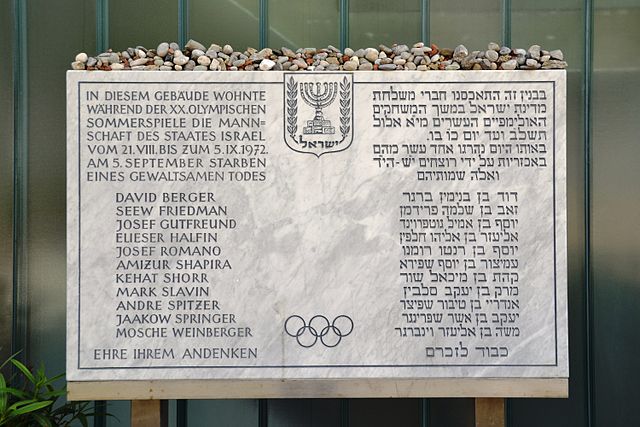 Forty years ago, the murderous Palestinian Terorists of the Black September gang massacred eleven Israeli athletes. The Olympic Committee still refuses to incorporate a minute of silence in the opening ceremony of the games.


 Posted by Arie Folger
 So last week, “Joe the Plumber,” now an Ohio congressional candidate,
  The Conference of European Rabbis included an interview with me in their most recent
  So there’s this this debate going on in England about a skeleton that was displayed apparantly against the explicit wish of its erstwhile live person (should we call it its “owner”?), Charles Byrne, and people are arguing whether to finally bury it, or whether so much time has passed (some 230 years) that it is no longer relevant. [Hat tip: Rabbi Ze’ev Smason]
 Mit Dankbarkeit zu G”tt freuen wir uns anzukündigen, dass wir umziehen. Aus dem

 Mikolot Mayim Rabbim