A Historic Pessach Kosher List from Very Dark Times

March 25, 2015

MouldyBreadEnglishAny and every Jew, even a great number who don’t usually have the good fortune to keep kosher, are now scrambling to purchase an assembly of mostly certified kosher-for-Passover products. But what do you do when this abundance is not available where you live? And more importantly, what were Jews of past generations to do, when food might be scarce, and their movements constrained?

Below is a historic document from one of the very darkest times of Jewish history, shedding some light on how they made efforts, even in the shadow of death, to keep Passover and celebrate whatever little freedom they still had, while praying to be redeemed once again from a valley of death. Read the rest of this entry »


Frag den Rabbi – Wird man nicht erst durch den Glauben Jude?

March 23, 2015

Rabbi-CoolClips_vc074807DeutschWenn ein Jude ein Atheist oder nicht praktizierender ist, wie kann er dann noch Jude sein?

Nun, ein atheistisches oder sonst abtrünniges Kind Israels ist und bleibt Jude, weil Juden keine Christen sind und nicht mit einer Taufe im Kirchenregister eingetragen werden, sondern dem Volk G”ttes mit ihrer Geburt unwiderruflich angehören. Um das besser zu verstehen, empfiehlt sich Read the rest of this entry »


Frag den Rabbi – Wie findet man koscheren Kleider

February 3, 2015

Rabbi-CoolClips_vc074807DeutschEs gilt ja das Gebot, dass man Kleider nicht aus zwei unterschiedlichen Stoffen anziehen darf. Weshalb eigentlich nicht und wie schafft man es Kleider zu finden, die Kosher sind?

Die Torá befiehlt (Leviticus 19:19): Es soll kein Kleid auf deinen Leib kommen, das von zweierlei Garn gewoben ist. Nach diesem Vers glauben Sie, dass die Torá Kleider, die aus mehr als ein Material, z.B. 70% Wolle mit 30% Polyester, verboten sind. Read the rest of this entry »


Frag den Rabbi – Warum sind die Juden das auserwählte Volk?

January 27, 2015

Rabbi-CoolClips_vc074807DeutschBetrachten wir die frühe biblische Geschichte, dann fällt auf, dass G”tt längst vor der Auserwählung Abrahams bereits mit Menschen sprach, eine Auserwählung hingegen vor Abraham nirgens zu spüren ist. Tatsächlich lehr Rabbiner Samson Raphael Hirsch, dass nach dem ursprünglichen g”ttlichen Plan es kein auserwähltes Volk geben müsste, sonder die ganze Menschheit heilig sein soll. Alle sollen nach den sieben noachidischen Gebote leben, damit es Frieden, Heiligkeit und Frommikeit auf Erden gäbe. Diese These ist umstritten, aber ich finde, sie entspricht hervorragend der Tatsache, dass bis Abraham,die Bibel universalistisch ist.

Leider scheiterte G”ttes Versuch, die ganze Menschheit vom Anfang an an einem hohen Standard zu halten, vier mal (Adam & Eva, Kain & Abel, die Generation des Sintfluts, die Generation nach dem Sintflut, nämlich die des Babelturms). Da jene g”ttliche Hoffnung sich als zur Zeit aussichtslos erwies, Read the rest of this entry »


Familienplanung wörtlich auf Eis

November 16, 2014

DeutschFreezing EggsTechnologiefirmen im Silicon Valley und anderswo denken sich inzwischen merkwürdige Extraleistungen für ihre Angestellten aus. Facebook-Mitarbeiter können ihr Fahrrad reparieren lassen oder den Friseur an den Schreibtisch bestellen, bei Dropcam können Angestellte ihre Freunde zu einem Hubschrauberflug einladen, und bei Google gibt es Nap Pods, eine Mischung aus Raumschiff und Kokon, in dem die Beschäftigten zwischendurch ein Nickerchen machen können.

Die jüngsten Offerten von Apple und Facebook sind nun ebenso umstritten wie schlagzeilenträchtig: Diese Firmen bezahlen ihren Mitarbeiterinnen »Social Freezing«, das heißt, sie können ohne medizinische Indikation Eizellen einfrieren lassen.

Lesen Sie meine Gedanken dazu in der Jüdischen Allgemeine.


A Well Trodden Path Out of the Conversion Law Impasse

November 4, 2014

Mikve_naia_3EnglishSince the conversion reform law of MK Elazar Stern passed its first reading, tensions have been rising between proponents and opponents of the law. The most succinct exhibit of those tensions is that Chief Rabbis Yitzhak Yosef and David Lau told Prime Minister Benjamin Netanyahu on Tuesday that the chief rabbinate would not recognize conversions performed by municipal chief rabbis under the terms of the proposed legislation. Rabbi David Stav, in turn, heavily criticized the chief rabbis, adding that „The person running the chief rabbinate today is Arye Deri. He decides who is a Jew and who is not, who is a rabbi and who is not.“

Stav further threatened that the law could pass and new conversion courts could effectively operate without the chief rabbis’ cooperation. This may be his strongest attack on the Chief Rabbinate of Israel to date; it is an outright declaration of war.

We are at an impasse. But there is a good and healthy way out.

Read the rest of my Op-Ed at the Jerusalem Post, or Click to See a Scan of the Article and Read the rest of this entry »


Wir gedenken Rabbi Ovadia Yosef

October 28, 2014

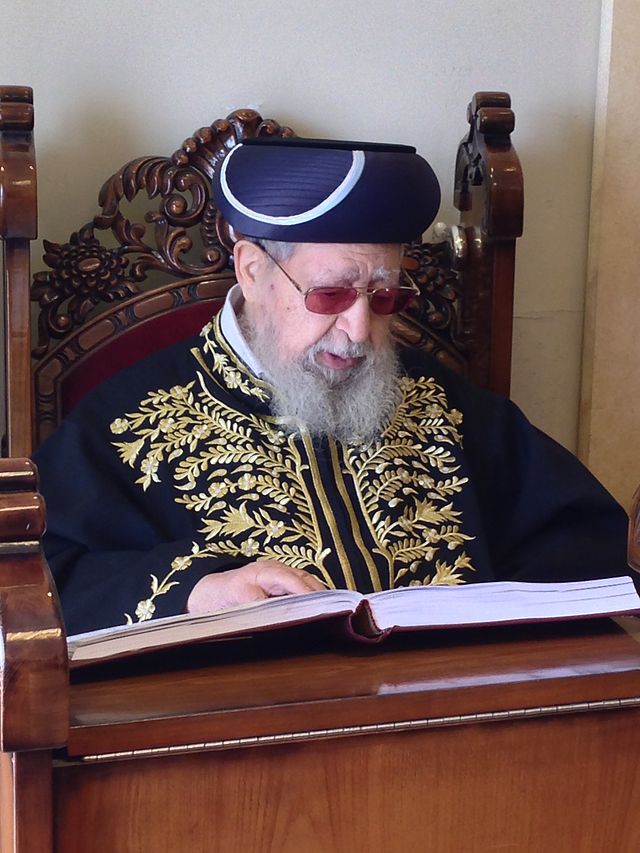
DeutschHarav_Ovadia_YosefVor einem Jahr und einem Tag (nach dem jüdischen Kalender) verlor die jüdische Gemeinschaft einen großen Mann, halachische Entscheider, politische Führer, rabbinischer Richter, Gründer einer Bewegung, Befürworter serfardischer Stolz, Oberrabbiner Israels, Rabbi Ovadia Yosef. Anbei eine kurze Skizze, wie ich sie im Züge seines letzten Weges im ORD-Magazin veröffentlichte.

Viele Menschen träumen davon, ihre Spuren auf der Welt zu einzuprägen. In ihrem Bestreben nach Unsterblichkeit haben Herrscher und Despoten imposante Gräber, prachtvolle Paläste und uneinnehmbare Festungen gebaut. Während ihre Mittel mehr bescheiden sind, haben Künstler ebenfalls Wege gefunden, um ihre Spuren zu hinterlassen, ob in der Form tiefen Abhandlungen, rührenden Gedichte oder verblüffenden Gemälde. Philanthropen habe sie oft übertroffen, in dem sie ihre Spuren in den Herzen der Menschen einpflanzten, die von ihrer Großzügigkeit lange nach ihrem Tod erzählten. Aber selten ist die Person, die in diesen Bemühungen erfolgreich war, und noch seltener ist die, die ihre Marke in allen drei Bereichen hinterließ. Read the rest of this entry »


Respecting, Caring for and Helping the Convert

October 28, 2014

Mikve_naia_3EnglishFamous Tanach expert Rav Yoel Bin Nun once said he is saddened when people sing the popular song vesamachta bechagecha vehayita ach sameach, which is rather surprising, since all the song is about is to repeat the mantra, lifted from parts of two biblical verses, that convey “you shall rejoice on your holiday and be gladdened.” What can be sad about that? Rav Yoel Bin Nun explained that his sadness stemmed from a misuse of the verses, as the thing which is to gladden us is (Deuteronomy 16:14-15):

And you shall rejoice in your feast, you, and your son, and your daughter, and your manservant, and your maidservant, and the Levite, the stranger, and the fatherless, and the widow, that are within your gates. … and you shall be gladdened

When we rejoice together with the poor, the weak, the downtrodden, the lost souls and those who wish to be part of our holy nation but have no Jewish parents or siblings with whom to celebrate the holidays, then we shall legitimately be gladdened. (Rav Yoel Bin Nun would want us to sing the first verse in its entirety. I tried it, but it is hard to fit to the tune 32px-Sert_-_sad_smile.svg.)

This is one of the many instances in which we are enjoined to help, support, protect and respect the convert. Following in the wake of a scandal in Washington DC, in which cameras were allegedly installed in a women’s mikve, a number of articles have been penned in support of converts, particularly female converts, and the challenges they face in the course and procedures of conversion. In this post, I would like to address one of those articles, A Bill of Rights for Jewish Converts by Bethany S. Mandel. In a different post, I address A Modest Proposal for Women’s Conversion by Michal Tikochinsky. Read the rest of this entry »


When a Modest Proposal is Unreasonable

October 28, 2014

Mikve_naia_3EnglishConversion to Judaism involves, after being screened and found to convincingly desire to accept the Yoke of Heaven and the Yoke of Mitsvot, having studied enough to know and understand what that involves, and living the life in a manner that projects confidence that one will continue living loyally according to these principles and commitments, to then declare one’s commitment before a rabbincal court, and to immerse oneself in a mikveh in presence of such a court. Before dipping, men must also undergo circumcision, or, if already sufficiently medically circumcised, have a drop of blood extracted in lieu of circumcision. The procedure is otherwise identical for men and women, though men immerse themselves naked, while women do so in a manner as to make this encounter as modestly as possible. This means that she will be dressed in a dark, somewhat heavy but loose robe, enter the water, and only once in the mikveh will the rabbinical judges enter, remain at a distance, conduct the requisite brief conversation, and see her head disappear under the water.

Typically, the rabbinical judges remain at the door, quite far from the actual mikveh, though this does also depend on the design of the room. Nonetheless, Rabbanit Dr. Michal Tikochinsky finds that some judges do come in into the room proper, and that some women find that insensitive. She has therefore  written A Modest Proposal for Women’s Conversion in which she revives an argument she first proposed in the journal Akdamut Milin in 2007 (article link). According to her, the judges don’t need to be there at all. She does raise some valid ponts, but regarding her main point, she is wrong and she knows it. Read the rest of this entry »


Jom Kippur, eine Begegnung mit G“tt

September 22, 2014

DeutschIMG_2955Bekanntlich wird Jom Kippur als der heiligste Tag des jüdischen Kalenders betrachtet. Ein Grund dafür, ist, weil er eine Begegnung mit G”tt bildet.

Anbei eine längere Faßung meines letzten Artikels in der Jüdischen Allgemeine. Nur eine Bemerkung. Rabbiner Joseph Ber Soloveitchik war gebürtiger “Litwak”, bekennte sich also der besonders stark vom Tora-Lernen und Analytik geprägten lithauisch-jüdischen Kultur. Diese heilige Kultur zeichnete sich durch ihre sehr hohe aber gleichtzeitig in der Bevölkerung sehr verbreitete intellektuelle Ausrichtung. Von solchen Leuten erwarten wir eine kompromislose, wissenschaftliche Präzise Talmud-Analytik. Wer hätte erwartet, in einem Litwak solche Dichterkunst und reiche Gefühle, zu entdecken … Read the rest of this entry »