Unterschriften-sammlung für einen offenen Brief zum Schutz des Rechtes auf Beschneidung

August 23, 2012

DeutschBefore_email_4_Air_letter_from_Saltpond,_Ghana_to_Kabala,_Sierra_Leone_(West_Africa)_January_1968_(3703187062)Liebe Freunde,

die Diskussion über die Zulässigkeit der Beschneidung nimmt in den Medien teilweise schreckliche Züge an. So gibt es zum Beispiel auf faz.net einen “Offenen Brief zur Beschneidung” — eigentlich einen Brief gegen der Beschneidung — in dem die Beschneidung von Jungen als “Anwendung von Gewalt” bezeichnet wird.

Um all diesen Artikeln etwas entgegen zu setzen und möglichst auch die im September zu erwartende Diskussion im Bundestag zu beeinflussen, haben Prof. Kyrill-Alexander Schwarz (Universität Würzburg) und Dr. Angelika Günzel ebenfalls einen Offenen Brief zur Beschneidungsdebatte verfasst, der in den nächsten Tagen in einer der großen Zeitungen veröffentlicht werden soll. Diesen Brief können Sie hier unten lesen (nach Bedarf klicken Sie auf “Read the rest of this entry”). Read the rest of this entry »


Plumbing the Depths of Aggaddic Exegesis

August 20, 2012

English320px-Talmud_setOne of the texts many, many thousands upon thousands of Jews studied recently, upon the beginning of a new cycle of Daf haYomi is the exegesis on the name of one of King David’s sons:

וא”ר יוחנן לא כלאב שמו אלא דניאל שמו ולמה נקרא שמו כלאב שהיה מכלים פני מפיבשת בהלכה

R. Jochanan said: His name [of King David’s second son] was not Kileav but Daniel. Why then was he called Kileav? Because he humiliated [maklim] Mephibosheth [David’s nemesis, presented here as David’s mentor, “av”] in the Halachah.

Ostensibly, all Rabbi Jochanan does, is to make sense out of a seeming contradiction in Scripture. In II Samuel 3:3, David’s second son is called Kileav, while in the parallel accound in I Chronicles 3:1, he is called Daniel. So one name – Daniel – is his real name, while the other – Kileav – is his biblical nickname, indicating, through midrashic exegesis some essential character trait (someone who defended David against his nemesis’ and erstwhile mentor’s accusations). However, I have long found this understanding too feeble. Is that all Rabbi Jochanan bases himself on? Is that all he wants to say? Is this midrashic exegesis totally independent from the plain understanding of the Scripture? Read the rest of this entry »


Did the Talmud Suggest G”d Has a Head? Learning to Interpret Rabbinic Legend

August 17, 2012

English320px-Talmud_setAdam Kirsch, writing in Tablet Magazine, mentions his astonishment, as he took up the daily regiment of Daf haYomi (a folio from the Babylonian Talmud every day), upon discovering some of the stranger Aggadot (rabbinic exploration of a non-legal nature, particularly legends, metaphors and exegisis). Thus, astounded at the Talmud teaching that G”d, too, has tefillin, he writes:

… the question nags: How exactly can God wear tefillin? Can we imagine God with an arm and a forehead? The rabbis apparently could, quite literally…

While noting that later commentaries dealt with his questions, Kirsch is still convinced that the Talmud tolerated or even championed views that are nowadays theologically problematic.

While Kirsch brushes upon a separate issue, on which a lot has been written, namely, whether there could exist a view in the Talmud which becomes halakhically obsolete (for example, Rabbi Hillel’s view that the Messiah had already come in the days of Kind Hezekiah), he mostly stumbles upon the nature of the entire genre of Aggaddah/Aggaddeta. So let’s ask his question the other way around. Did the Talmud really suggest that G”d puts on tefillin, and that He consequently has an arm and a head to wrap those around? Read the rest of this entry »


Photos From Interfaith Meeting

August 3, 2012

EnglishA couple of weeks ago I posted these two posts (in English and in German) about thoughts I shared at an interfaith meeting at the European Commission. Well, here are the official photos:


Jose Manuel Barroso, Van Rompuy, Surján and me


Aus dem Archiv: Leserbrief zu Organspenden

July 30, 2012

Deutschheart-copyleftVor eine Weile veröffentlichte die Jüdische Allgemeinde den folgenden Leserbrief von mir, zum Thema Organspenden und Halacha. Es war eine Reaktion auf dem folgenden Artikel: Leo Latasch über den Deutschen Ethikrat.

Übrigens, auf Dauer lassen die meisten Patienten ganz sicher ihre eigene, auf Mass vorbereitete, genetisch passende Organe wachsen: Can skin cells help heal your heart? (Scientific ‎Times).
Read the rest of this entry »


Remembering the Palestianian Murderers of the 1972 Munich Olympics

July 29, 2012

EnglishMunich Olympics terrorist - Ap_munich905_tGuri Weinberg, the son of Moshe Weinberg, one of the athletes murdered in the 1972 Munich Olympics, reports on Fox News of an interchange he had had at the 1996 Atlanta Olympics:
In 1996, I, along with other Munich orphans and three of the widows, were invited for the first time to the Olympic Games in Atlanta. Before the Opening Ceremony, we met with Alex Gilady. Gilady has been a member of the IOC’s Radio and Television Commission since 1984 and has been the senior vice president of NBC Sports since 1996.

I have known Mr. Gilady since I was a kid; in fact, I grew up with his daughter. He had been supportive in the past regarding our plea for a moment of silence during the Opening Ceremonies, so we arrived with high hopes. Gilady informed us that a moment of silence was not possible because if the IOC had a moment of silence for the Israeli athletes, they would also have to do the same for the Palestinians who died at the Olympics in 1972.

My mother said, “But no Palestinian athletes died.”

Gilady responded, “Well, there were Palestinians who died at the 1972 Olympics.” Read the rest of this entry »


New York Time Obituary for Rav Elyashiv

July 19, 2012

EnglishRavElyashiv2The crown has fallen off our heads, woe to us. Two days ago, one of the greatest poskim (halakhic decisors) and lammedanim (expert talmudists), Rav Shalom Yossef Elyashiv of Jerusalem, passed away, leaving the Jewish world bereft of his presence, counsel and expertise.

Regardless of where one stands philosophically within tradition Orthodox Judaism, this is a great loss.

The New York Times ran a very well written obituary about R’ Elyashiv here.

Some choice quotes:

Rabbi Elyashiv’s decisions were honored, if not always obeyed, beyond his own ultra-Orthodox, non-Hasidic world known as Lithuanian or yeshivish Jews. His word also influenced Hasidim, Orthodox Sephardim from Muslim countries and many modern Orthodox Jews.

Rabbi Elyashiv’s opinions — for years he was a member of Israel’s highest rabbinical court — were crucial to controversies within the country about who is a Jew and when is a marriage truly dissolved and when is a conversion legitimate.

He also cast decisions in the most private of cases. Hundreds of Jews would stream to his home — a modest one-bedroom apartment in an alleyway in the ultra-Orthodox quarter of Mea Shearim in Jerusalem — to seek his opinions on their personal quandaries, or simply his blessings. They also came to his nightly tutorials on Talmud, much of which he knew by heart.


A Prayer for the Victims of the Olympic Terrorist Massacre

July 18, 2012

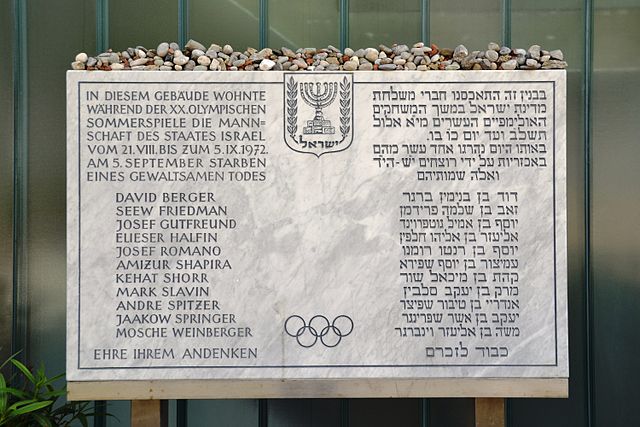
English640px-Connollystraße_31_-_GedenktafelForty years ago, the murderous Palestinian Terorists of the Black September gang massacred eleven Israeli athletes. The Olympic Committee still refuses to incorporate a minute of silence in the opening ceremony of the games.

Meanwhile, Jews, synagogues and many other Jewish organizations are looking to meaningfully commemorate the victims. Many of the prayers floating around veer significantly from the traditional prayer texts, while many people find particularly those traditional texts meaningful. All such memorial prayers floating around the net fail to incorporate the full names of the victims (in the form of ploni ben ploni). As a matter of public service I am therefore posting the text of the E-l Male Rachamim prayer that I wrote for this occasion. It is thoroughly traditional and has the full names of all the athletes. Read the rest of this entry »


Overcoming Intergenerational Conflict

July 12, 2012

EnglishHand_holding_finger_bw babyToday I appeared at the European Commission at the invitation of EC President Jose Manuel Barroso, as part of an interfaith panel charged with exploring ways to restore intergenerational solidarity that in recent years has been steadily eroding in Europe (video of the press conference, in which although I am present, I did not take a speaking role). Below is my essay that was the source of my comments.
Read the rest of this entry »


Den intergenerationellen Konflikt überwinden

July 12, 2012

DeutschHand_holding_finger_bw babyHeute erschien ich als Teil eines interreligiösen Panels bei der europäischen Kommission, nach Einladung deren Präsidenten Jose Manuel Barroso, um sich laut Gedanken zu machen, wie die wachsenden intergenerationelle Spannung zu überwinden und die Solidarität zwischen Jung und Alt zu stärken. (Video der Pressekonferenz, in der ich zwar anwesend war, aber nicht das Wort ergriff) Anbei mein Beitrag.
Read the rest of this entry »